
The effectiveness of the pandemic H1N1 influenza vaccination program, introduced in Scotland in October 2009, has been assessed by a team of researchers from different Scottish and French institutions, coordinated by Dr. Colin Simpson, from the University of Edinburgh. The results of this assessment has been published in the June issue of Lancet.
The vaccination campaign consisted of two phases, the first being aimed at frontline health-care workers, pregnant women and people whose underlying health problems make them more sensitive to influenza-like illness; in the second phase, all children aged between 6 months and 5 years were targeted.
The researchers performed a retrospective study by linking primary care, hospital records and death certification datasets of 247178 persons, representing the 5% of Scottish population. Of them, 38296 (15.5%) were given the vaccination. In this nationally representative cohort there were fewer hospital admissions and deaths from influenza-like illness – influenza, pneumonia, chronic obstructive pulmonary disease and cardiac disorders – in patients who were vaccinated against H1N1 influenza A virus. A representative sub-group of patient was swabbed and tested with RT-PCR, revealing an estimated vaccine effectiveness of 77%. Such a result proved to be higher than recent estimates in case-control studies undertaken in the UK (72%) and Europe (71.9%) but lower than another one performed in Navarre, Spain (89%).
The study thus provided evidence that the Scottish H1N1 vaccination program have been effective, both in terms of protection against the virus and reduction of mortality from influenza-like illness, and is likely to have reduced the burden of pandemic influenza on health-care providers.
Effectiveness in Scotland
prossimo articolo
La ricerca e l'innovazione dell'IA in mano a oligopoli privati: l’allarme e le soluzioni
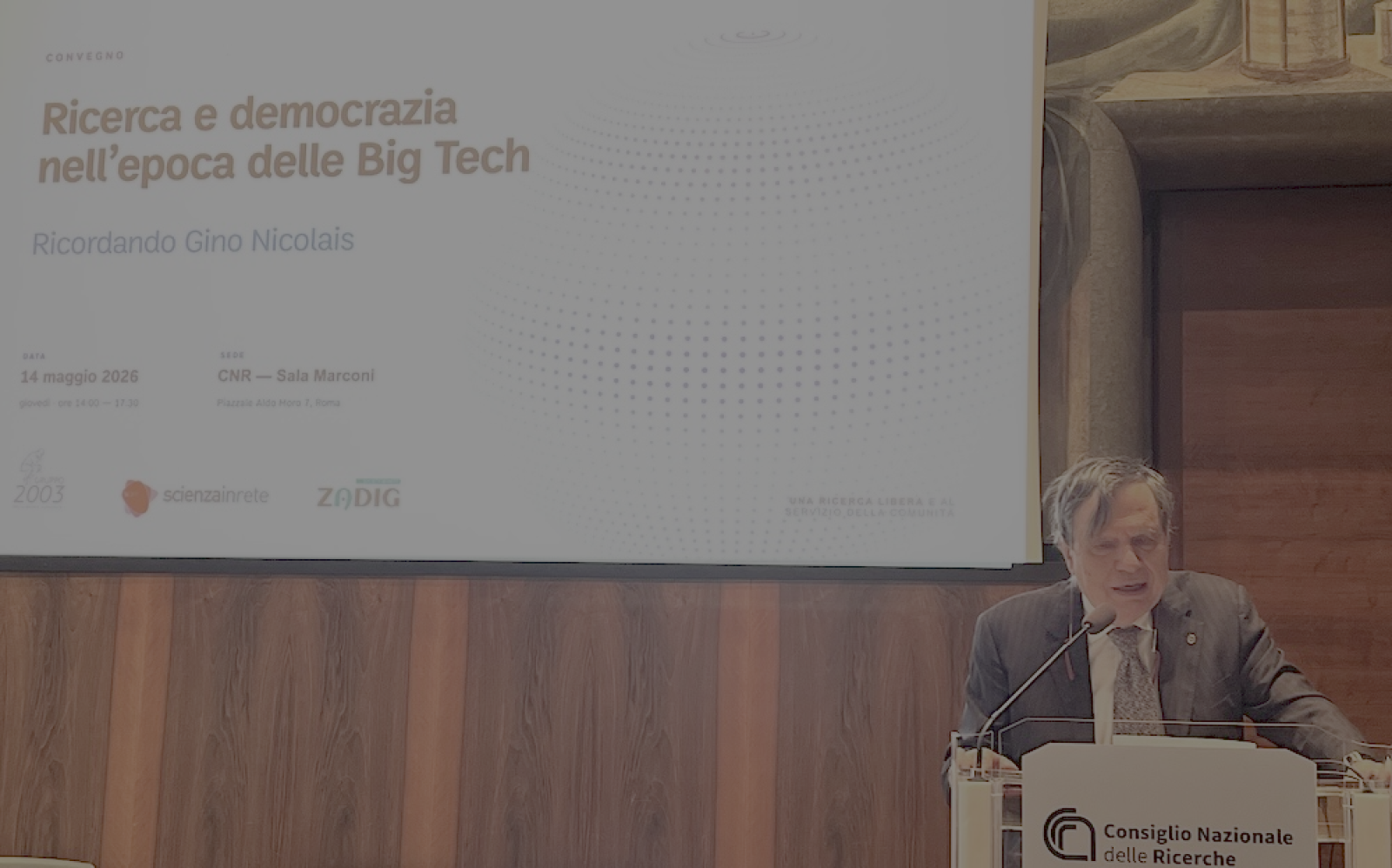
L'intelligenza artificiale va regolamentata prima che si affermino forme di oligopolio, o persino di monopolio, capaci controllare l'accesso alle informazioni e la produzione di nuove conoscenze: per questo serve un grande centro di ricerca pubblico che oggi può essere realizzato solo in Europa. Lo afferma il premio Nobel per la fisica Giorgio Parisi in occasione del convegno "Ricerca e democrazia nell'epoca delle Big Tech" organizzato dal Gruppo 2003 per la ricerca scientifica il 14 maggio presso la sede del CNR a Roma, in collaborazione con Scienza in rete. Il dossier presentato dall'associazione sostiene con dati i rischi posti da un predominio economico schiacciante esercitato da poche aziende che valgono quanto il PIL degli USA, e che stanno condizionando profondamente anche l'ecosistema della ricerca scientifica, sempre meno aperto e controllato dalla comunità di riferimento.
Nell'immagine Giorgio Parisi, foto di Luca Carra.
Sei aziende (NVIDIA, Alphabet, Apple, Microsoft, Amazon e Meta) valgono oggi circa 22.000 miliardi di dollari, tre quarti del PIL degli Stati Uniti. Nel solo 2026 spenderanno in infrastrutture digitali tra 660 e 725 miliardi di dollari, circa tre volte e mezzo il bilancio federale americano per tutta la ricerca civile.