
The effectiveness of the pandemic H1N1 influenza vaccination program, introduced in Scotland in October 2009, has been assessed by a team of researchers from different Scottish and French institutions, coordinated by Dr. Colin Simpson, from the University of Edinburgh. The results of this assessment has been published in the June issue of Lancet.
The vaccination campaign consisted of two phases, the first being aimed at frontline health-care workers, pregnant women and people whose underlying health problems make them more sensitive to influenza-like illness; in the second phase, all children aged between 6 months and 5 years were targeted.
The researchers performed a retrospective study by linking primary care, hospital records and death certification datasets of 247178 persons, representing the 5% of Scottish population. Of them, 38296 (15.5%) were given the vaccination. In this nationally representative cohort there were fewer hospital admissions and deaths from influenza-like illness – influenza, pneumonia, chronic obstructive pulmonary disease and cardiac disorders – in patients who were vaccinated against H1N1 influenza A virus. A representative sub-group of patient was swabbed and tested with RT-PCR, revealing an estimated vaccine effectiveness of 77%. Such a result proved to be higher than recent estimates in case-control studies undertaken in the UK (72%) and Europe (71.9%) but lower than another one performed in Navarre, Spain (89%).
The study thus provided evidence that the Scottish H1N1 vaccination program have been effective, both in terms of protection against the virus and reduction of mortality from influenza-like illness, and is likely to have reduced the burden of pandemic influenza on health-care providers.
Effectiveness in Scotland
Primary tabs
prossimo articolo
Recuperare il cammino dopo un ictus: la tecnologia al servizio della cura
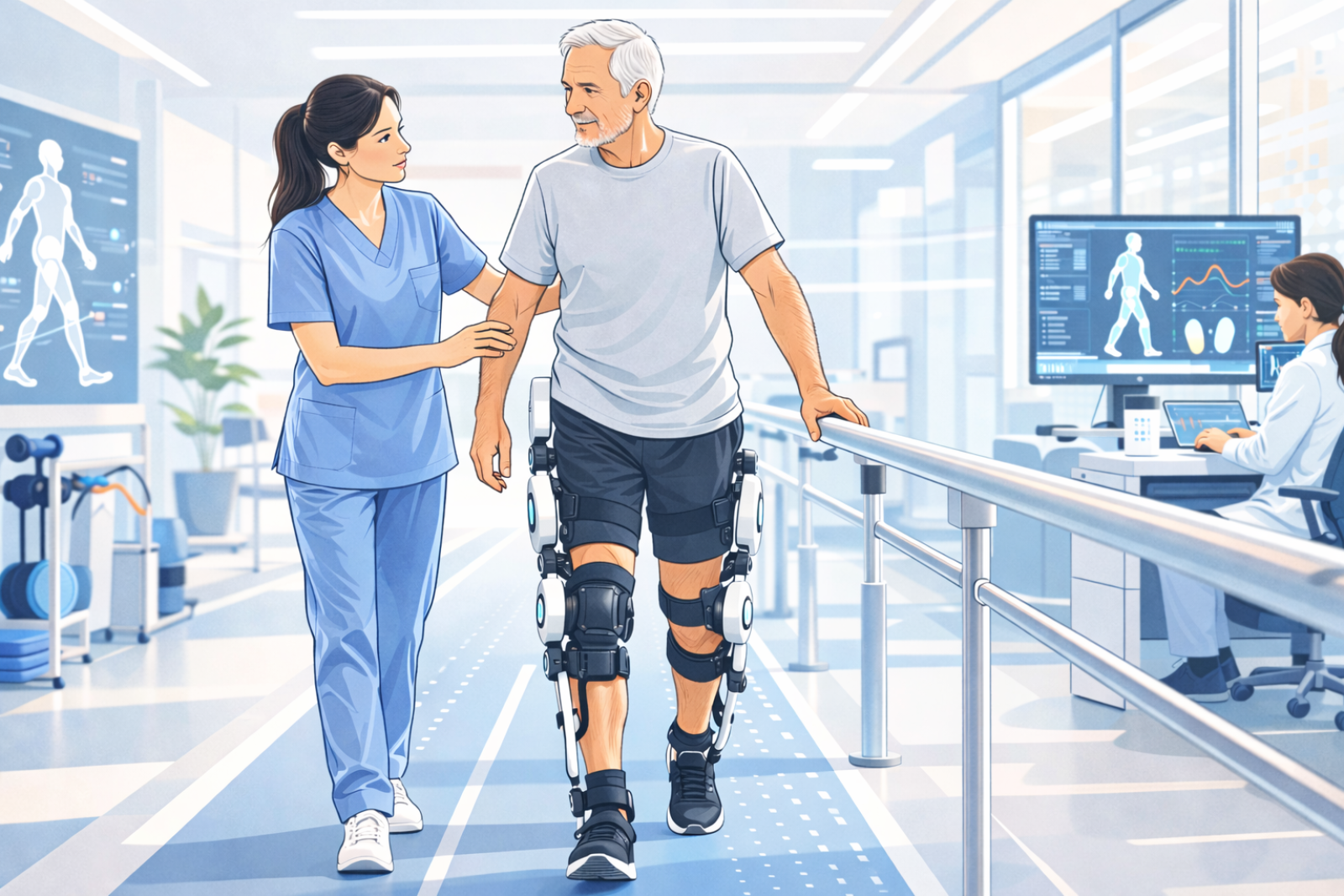
Presso il LAMoBiR dell’IRCCS Fondazione Don Carlo Gnocchi di Milano la riabilitazione delle persone che in seguito a un ictus hanno ridotto la capacità di camminare si basa sullo studio di sistemi che integrano la robotica con la stimolazione elettrica funzionale dei muscoli. In collaborazione con IIT di Genova sono stati realizzati un esoscheletro e un’apparecchiatura per l’elettrostimolazione che offrono vantaggi rispetto a quelli già in uso. I ricercatori invitano le persone colpite dal problema a entrare a far parte dello studio. Immagine realizzata con l'ausilio di Chat GPT.
«Quella mattina mi sono svegliato con un forte mal di testa e ho scoperto di non riuscire a muovere né la mano e la gamba destre, né a parlare». Questa è la testimonianza di Andrea Vianello - noto giornalista della RAI - rilasciata in varie interviste e poi descritta nel libro Ogni parola che sapevo (Mondadori, 2020), in cui racconta il lento e faticoso percorso di recupero seguito all’ictus che lo ha colpito.