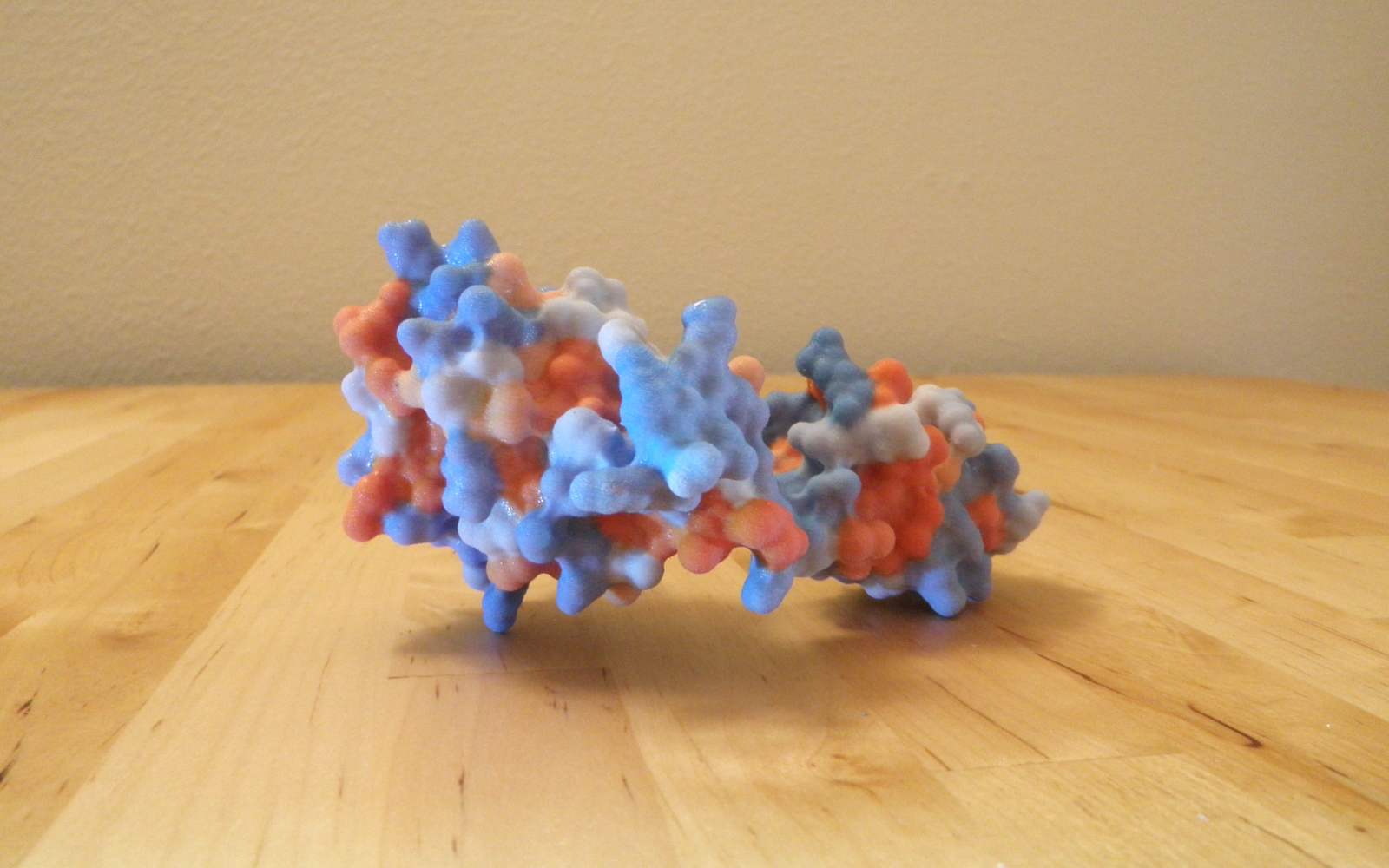
A preclinical test that may open new perspectives in the diagnosis of neurological disorders. This is the result accomplished by a group of researchers from the Center of Complexity and Biosystems of the University of Milan, who just published their work on Physical Review Applied.
A vast class of incurable neurodegenerative disorders are characterized by the aggregation and deposition of aberrant proteins like the beta-amyloid peptide or the alfa-synuclein, considered to be a factor behind the development of Alzheimer’s and Parkinson’s diseases, respectively. Detecting the onset of such aggregations before the appearance of the symptoms of the disease is almost impossible nowadays, but some possible solutions have been proposed. One of the most promising ones is to take advantage of the same process that determines the spread of the diseases to amplify minute quantities of protein aggregates. By doing this, it would be possible to screen small biological samples for the presence of very low concentrations of aberrant aggregates, thus allowing preclinical diagnosis of neurodegenerative diseases.
Recent advances in microfluidic technology allow analysis of protein aggregation in very small samples but, in order to enable such diagnostic approach, it is necessary to find a way to minimize the risk of false positive or negative detections, which may easily occur when analysing small quantities of biological material.
And here is where the group of researchers from the Center of Complexity and Biosystems comes into play.
The authors of the study addressed the problem with a computational approach. Basically, they simulated the onset of protein aggregations in small samples, in order to study how this process fluctuates depending on the volume of the samples. By doing that, they managed to design and validate a preclinical screening test that will ultimately allow the determination of the exact number of aggregates within the analysed sample. Such a result will improve the precision and quality of protein aggregations detection, thus representing a first step towards the realization of in vitro tests for early diagnosis of neurodegenerative diseases.
“This is the first proof of concept in silico that could guide the development of a test in vitro to identify neurodegenerative disease before symptoms appear”, said Caterina la Porta, biologist and leader of the research group.