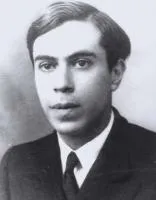
Ettore Majorana (Catania, 1906 – disappeared between Palermo and Naples, 1938) was born on August 5, 1906 into a distinguished family. His grandfather, Salvatore Majorana Catalabiano, was a lawyer who participated in the insurrection against the Bourbons, served in parliament, and held the position of Minister of Agriculture twice.
Salvatore married Rosa Campisi and had seven children. Three sons—Giuseppe, Angelo, and Dante—became rectors of the University of Catania. Quirino, another son, was a physicist who held a chair at Bologna, succeeding Augusto Righi. Fabio Massimo studied Engineering and became head division and later inspector general of the Ministry of Communications.
Majorana displayed remarkable intelligence from childhood and exceptional mathematical ability. Between ages eight and nine, he moved to Rome and attended the Jesuit-directed Istituto Massimo as a boarder. He completed elementary school and gymnasium in four years, then attended Liceo Statale Torquato Tasso, earning his classical diploma in summer 1923.
Initially enrolled in engineering, he switched to physics at Emilio Segre’s suggestion. At the Physics Institute, he met Enrico Fermi and graduated in 1929, writing a thesis on radioactive nuclei mechanics. Before graduation, he had already demonstrated exceptional theoretical skill by developing Fermi’s statistical atom model (Thomas-Fermi model) and extending it to ions.
Fermi and the via Panisperna group recognized Majorana as a genius. He studied atomic spectroscopy problems and electron exchange mechanisms in chemical bonding, hypothesizing that nuclear forces were exchange forces.
When Frederic Joliot and Irene Curie obtained unexplained spectral lines in 1931, Majorana reportedly commented: “they’ve discovered the neutral proton and don’t realize it.”
Following the neutron’s discovery in 1932, Majorana developed exchange force theory but refused publication, claiming incomplete work. Werner Heisenberg subsequently published on exchange forces the next month. Majorana still refused to publish.
That year, Majorana published a method for deriving relativistic quantum equations for any spin value, previously thought possible only for spin 0 or 1/2. With Fermi’s encouragement and a CNR fellowship, he traveled to Leipzig and Copenhagen, meeting Heisenberg and Bohr. Heisenberg convinced him to publish his nuclear exchange model, now known as “Majorana exchange forces,” distinct from Heisenberg’s.
Returning from Germany, he rarely visited via Panisperna, suffering gastritis and probable depression. He continued physics research, publishing in 1937 that neutral fermions correspond to their antiparticles, proposing neutrinos as such—now called Majorana neutrinos.
His final 1937 work, published posthumously, examined “The value of statistical laws in physics and social sciences,” showing expanding scientific interests. That year he won a competition for theoretical physics professorship at Naples “for clear fame,” with Fermi on the examining commission.
He remained in Naples one year. In March 1938, he mysteriously disappeared. Last traces place him on the mail boat from Palermo to Naples.
His disappearance intrigued physicist Edoardo Amaldi and writer Leonardo Sciascia, but mystery persists. Fermi noted: “Ettore had all the capabilities to disappear if he wanted.” Whether voluntary disappearance, suicide, or accident remains unknown, but this vastly underutilized genius never fully realized his extraordinary potential.
“There are various categories of scientists…But then there are geniuses, like Galileo and Newton. Well, Ettore was one of those.” (Enrico Fermi)