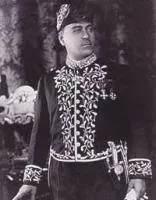
Nicola Parravano (1883-1938) was an accomplished chemist from Fontana Liri who studied under notable scientists like Stanislao Cannizzaro and Emanuele Paterno at the University of Rome, graduating in 1904.
His career included positions at universities in Padova and Firenze, where he established Italy’s first Physical Chemistry chair in 1915. During World War I, he served on the Supreme Commission for explosive testing and received the Royal Academy of Lincei’s Chemistry Prize in 1919.
Parravano contributed significantly to industrial research, helping establish the Scientific Institute for metallurgical research and collaborating with the Institute for Industrial Reconstruction. He worked closely with Guglielmo Marconi at the National Research Council and served on various educational and health councils before his 1938 death.
His scientific contributions focused on physical and inorganic chemistry, particularly heterogeneous catalysis and metallic alloys with three to four components. He maintained close ties to fascism, viewing science as a social force and scientists as ethical-political figures. Shortly before his death, he organized the Tenth International Chemistry Congress in Rome’s new university city.