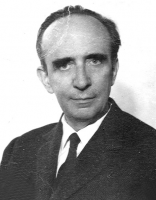
Giuseppe Moruzzi (Campagnola Emilia, 1910 – Pisa, 1986) was one of Italy’s greatest 20th-century neurophysiologists. His research focused on cerebellar functions, corticocerebellar and pyramidal neuron properties, and sleep-wake mechanisms.
Born in Reggio Emilia province, he earned his medical degree from the University of Parma in 1933. His neuroscience interests developed through encounters with Mario Camis and Antonio Pensa, a student of Camillo Golgi. After holding positions at universities in Siena, Parma, and Ferrara, he settled permanently in Pisa in 1948, transforming its Physiology Institute into an internationally recognized research center.
In 1958, Moruzzi became director of the CNR’s Neurophysiology Study Center at the University of Pisa. The institute became a major school, hosting renowned neuroscientists like Michael Gazzaniga and training brilliant Italian researchers including Giacomo Rizzolatti.
Moruzzi conducted significant personal research. With Englishman Edgar Douglas Adrian, he recorded single motor cortex neuron activity in the pyramidal tract in 1939—findings still essential for understanding nervous system function.
In 1949, Moruzzi discovered with Horace Magoun that repetitive electrical stimulation of the bulbo-ponto-mesencephalic formation produced Berger’s arrest reaction and electroencephalogram activation. This discovery established the reticular activating system (RAS) concept, crucial for understanding cortical activation during wakefulness.
At Pisa, he demonstrated that the brainstem generates both wakefulness and sleep, proposing a complete explanation of sleep-wake mechanisms in 1963.