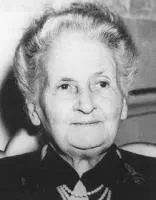
Maria Montessori (Chiaravalle, 1870 – Noordwijk, 1952) was among the first Italian women to earn a medical degree in 1896, the same year she participated in a women’s emancipation congress in Berlin. She later specialized in child psychiatry and is regarded as one of history’s greatest educators. Between 1899-1900, she directed Rome’s Orthophrenic School. In 1907, she established the “Casa dei bambini” in San Lorenzo, a working-class Roman neighborhood, applying methods developed through work with disabled children. Her 1909 publication “Il metodo della pedagogia scientifica applicato all’educazione infantile nella casa dei bambini” brought her widespread recognition. The New York Tribune called her “the most interesting woman in Europe” upon her 1913 arrival in America.
Montessori’s educational philosophy centered on recognizing each child’s creative and emotional capacities through environmental management. Learning through freedom and self-discovery—trial and error—formed her pedagogical foundation. Teachers should refrain from interference, intervening only when requested. Classrooms needed structures supporting children’s autonomy at both preschool and elementary levels.
Her method spread globally. Mussolini closed the “Case del bambini” in 1934. Montessori fled Italy in 1936 due to fascism’s opposition, eventually settling in Leiden, the Netherlands.