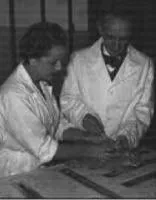
Filomena Nitti (Naples, 1909 - Rome, 1994) was born on January 10, 1909, to Antonia Persico and Francesco Saverio Nitti. Her father was a prominent economist who championed modernization of Southern Italy and served as Prime Minister between 1919-1920.
Filomena initially remained in Naples with her grandparents while her parents lived in Rome. However, when Mussolini seized power and fascists destroyed the Nitti family home, the family relocated first to Zurich, then to Paris due to financial constraints.
In Paris, Filomena studied natural sciences at university and collaborated with historian Gaetano Salvemini. Her antifascist convictions led her to communist youth organizations and a 1935-1936 stay in Moscow, where she worked as a journalist and chemical analyst.
At the Pasteur Institute, where her brother Federico worked with Swiss scientist Daniel Bovet, Filomena joined the research team. She and Bovet married in 1939, continuing collaborative work on chemotherapy and drug molecules to combat cancer.
After World War II, the couple moved to Rome’s Higher Institute of Health, where they developed psychopharmacology research. In 1948, they published “Structure et activite pharmacodynamique des medicaments du systeme nerveux vegetatif,” considered foundational to the field. Bovet received the Nobel Prize in 1957 for work on sulfonamides and antihistamines, to which Filomena contributed significantly.
After leaving the Institute in the early 1960s, Filomena joined the National Research Council until 1975. She died in Rome in 1994.