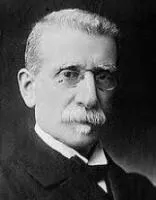
Ettore Marchiafava (Roma, 1847 – Roma, 1935) was a major figure in the global fight against malaria. He earned his medical degree from La Sapienza University in Rome in 1871 and later became a professor there. By 1885, he held the position of full professor of pathological histology.
From 1880 to 1891, Marchiafava collaborated with Angelo Celli to study the protozoan responsible for malaria, recently discovered by Alphonse Laveran. Working with blood samples from malaria patients in the Roman countryside, they named the causative agent Plasmodium and documented its developmental stages.
Between 1885-1886, Camillo Golgi had identified two malaria forms. Marchiafava and Celli built on this work, identifying a third type—malignant tertian fever—particularly prevalent in Rome and the Pontine marshes during summer and autumn.
The pair also discovered the meningococcus bacterium. Marchiafava first described the histopathology of syphilitic cerebral arteritis and later demonstrated degenerative brain phenomena in chronic alcoholics, leading to the condition named “Marchiafava-Bignami disease.”
He was appointed Senator in 1913 and served as vice-president of the Accademia dei Lincei.