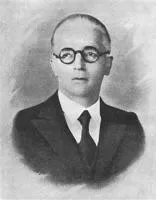
Domenico Leone Pacini (Marino, 1878 – Roma, 1934) was a physicist and one of Italy’s first “missed Nobels” in physics. Born in Marino near Rome, he earned his physics degree in 1902 and became assistant to Pietro Blaserna. With Alfonso Sella, he investigated electrical conductivity of gases before transitioning to modern physics.
In 1906, Pacini joined the Central Office of Meteorology and Geodynamics to study atmospheric electrical phenomena. He addressed a scientific puzzle: electroscopes spontaneously discharged, but the cause remained unexplained.
Between 1907-1912, Pacini conducted extensive experiments at sea surface and underwater at various depths. He measured discharge rates and discovered they slowed considerably beneath the surface, decreasing further with depth. This led him to conclude that significant “penetrating radiation” originated not from terrestrial rocks, but from above—likely from cosmic sources.
That same year, 1912, Austrian physicist Victor Hess used balloons to demonstrate radiation intensity increased with altitude. Their findings aligned perfectly, confirming “cosmic rays” existed.
Hess received the 1936 Nobel Prize for this discovery. Pacini, despite becoming professor of “terrestrial physics” at Rome University (1913) and holding the “experimental physics” chair at Bari University (1928), remained largely forgotten.