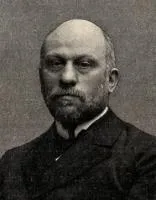
Angelo Mosso (Chieri, 1846 – Torino, 1910) was one of Italy’s greatest physiologists of the late 19th and early 20th centuries. His father worked as a blacksmith, and through assisting him, young Angelo developed mechanical aptitude early on. He earned his medical degree from Turin in 1870.
Following graduation, Mosso served as a medical officer in various cities before pursuing research starting in 1873 at Moritz Schiff’s physiology laboratory in Florence. He subsequently worked with Carl Ludwig in Leipzig and collaborated in Paris with Claude Bernard and notably Etienne-Jules Marey.
Returning to Turin, Mosso became professor of pharmacology in 1879, later succeeding Jakob Moleschott as chair of physiology. While initially influenced by Moleschott’s materialist philosophy, he eventually distanced himself from it.
Mosso’s research focused on human physiology under varying environmental conditions, examining muscle fatigue and the relationship between intellectual activity and cerebral blood circulation. He established a laboratory on Monte Rosa to study high-altitude physiology.
Around age fifty, spinal illness forced lifestyle changes. Following medical advice to spend considerable time outdoors, he transitioned careers toward archaeology, participating in significant excavations in Crete and publishing extensively on the subject.
He became a Senator of the Kingdom in 1904. The Angelo Mosso Institute was inaugurated in 1907 at 2,901 meters elevation on Monte Rosa.