
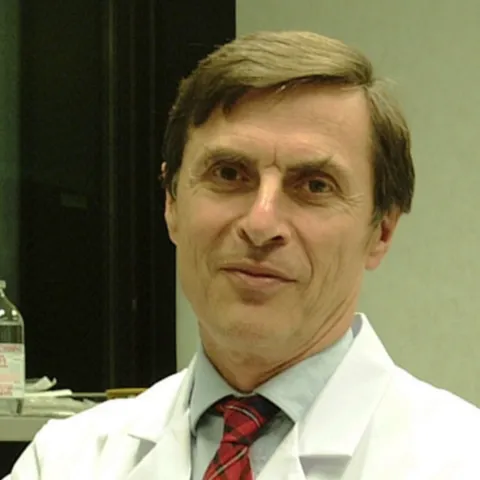
Alberto Mantovani
Alberto Mantovani was born in 1948 in Milan, where he graduated in Medicine and Surgery in 1973. After specialising in oncology, he worked in the United Kingdom at the Chester Beatty Research Institute in London (1975-1976) and in the United States at the National Institutes of Health (1978-1979 and 1985-1986). He is Full Professor of General Pathology at the Faculty of Medicine and Surgery of the University of Milan and, since 10 October 2005, Scientific Director of Humanitas. Previously he was Head of the Department of Immunology and Cell Biology at the Mario Negri Institute for Pharmacological Research in Milan. His research has long focused on immune defence mechanisms, with particular reference to the most primitive defence systems (innate immunity).
Professor Mantovani has contributed to advancing knowledge in this field both by formulating new paradigms and by identifying new molecules and functions. In particular, his work from the 1970s onwards showed that macrophages present within tumours — a fundamental component of the inflammatory reaction — act as a mechanism that promotes tumour growth and progression, contrary to what was believed at the time.
The search for molecules that drive macrophages into tumours led Professor Mantovani’s group, in the early 1980s, to discover the chemokine known as Monocyte Chemotactic Protein-1/CCL2, thus contributing to the discovery of the large chemokine superfamily. For his research, Alberto Mantovani has received many national and international awards. Bibliometric analyses place him among the 100 most-cited immunologists of the past 20 years in international scientific literature.