Italian research map
Quantifying the importance of a research center is a complex task. It is difficult to find an agreement on evaluation metrics – such as publications, funds or the number of researchers – for the results obtained.
Quantifying the importance of a research center is a complex task. It is difficult to find an agreement on evaluation metrics – such as publications, funds or the number of researchers – for the results obtained. One of the most unbiased approaches is to investigate the network of relationships that links all the research centers.Italian research centers collaborate with each other and with centers from abroad in many ways: multiple affiliations, public-private partnerships, institutional contacts, consortia and other forms of aggregation for the sharing of projects, technological platforms, and so on.
A complete analysis of the relationships between the laboratories would be particularly complex. We opted for a simpler criterion to reveal this network: identifying who participates to a Europe-funded project – particularly within the Seventh Framework Program (FP7) – and who are his partners.
Counting the participations to European projects is one of the criteria that allow to reveal the most active research centers, the others being:
- the number of connections;
- the value of the projects;
- the value of the partners.
We thus tried to visualize in a coherent way the structure of these data, ranging from a general (number of projects) to a particular (characteristics of a specific research center) perspective.
This analysis was based on a dataset provided by Cordis (Community Research and Development Information Service), which includes data on those projects with at least one Italian participant center and all the information about the other participants. Table 1 shows the research topics, the total number of projects relative to each topic and the number of projects where at least one Italian center is involved.
Tab. 1. FP7 projects (source: Cordis. Not definitive data)
[TABLE]
We selected the five most relevant topics – based on the number of projects and the highest scientific and technological content – and we further analyzed them. These topics are:
- ICT - Information and communication technologies
- Health
- NMP - Nanoscinces, Nanotechnologies, Materials and new Production Technologies
- Transport
- KBBE - Food, Agricultural and Biotecnology
We thus analyzed the 2.249 projects included in these 5 topics and, for each topic, we identified the first three Italian centers based on the number of participations, which turned out to be 11 (table 2). We also visualized the projects flow from the total up to this eleven through a histogram (figure 1) and a Sankey diagram (figure 2). We excluded all the other research centers from such visualization.
Fig. 1. Relationship between total projects and the projects with at least one Italian participant center (click to enlarge)****

** **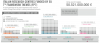

Fig. 2. From topics to centers (click to enlarge)

Tab. 2. First three italian centers for each selected topic
| Theme | First | Second | Third |
| ICT | Consiglio nazionale delle ricerche | Politecnico di Milano | STmicroelectronics |
| Health | ISS | Università di Milano | Università di Torino |
| NMP | Consiglio nazionale delle ricerche | Centro ricerche FIAT SCPA | D’Apolonia SPA |
| Transport | Centro ricerche FIAT SCPA | Centro italiano ricerche aerospaziali SCPA | AVIO SPA |
| KBBE | Università di Bologna | Consiglio nazionale delle ricerche | Università di Milano |
For each of these 11 centers we obtained further indicators:
- Found amount: the total sum of the funds allocated to the projects to which the center has participated.
- International network: the relationship between the total number of partners and the number of international partners.
- Esteem value: the relationship between the number of partners and the number of co-participation with a high-level university (in the table “Gold partecipations”). The list of high-level universities was obtained from the Thompson Reuter ranking (http://www.timeshighereducation.co.uk/world-university-rankings/2012-13/…). To make things easier, we only selected the first 4 (and excluded those that did not participate to FP7 projects): University of Oxford, University of Cambridge, Imperial College London, ETH Zürich – Swiss Federal Institute of Technology Zürich.
Tab 3. Statistics of the first three centers for each topica
[TABLE]
Tab 4. Statistics of the 11 centers for all the topics
| Center | Projects | Partners | Gold partecipations | International Pertners | Project funding |
| Consiglio nazionale delle ricerche | 483 | 6341 | 100 | 5580 | € 1.786.192.555 |
| Università di Bologna | 190 | 2402 | 35 | 2081 | € 710.465.114 |
| Politecnico di Milano | 166 | 2127 | 42 | 1786 | € 692.845.486 |
| Centro ricerche FIAT SCPA | 159 | 2131 | 13 | 1884 | € 752.745.765 |
| Università di Milano | 92 | 1140 | 40 | 998 | € 357.049.683 |
| D’Apolonia SPA | 86 | 1202 | 6 | 1024 | € 323.461.145 |
| STmicroelectronics | 72 | 756 | 13 | 621 | € 292.120.658 |
| ISS | 67 | 1113 | 24 | 1012 | € 294.314.214 |
| Università di Torino | 66 | 801 | 22 | 694 | € 238.254.957 |
| Centro italiano ricerche aerospaziali SCPA | 34 | 660 | 7 | 595 | € 246.039.570 |
| AVIO SPA | 25 | 588 | 17 | 540 | € 266.720.264 |
Finally, in order to make these statistics easier to be read, we represented these indicators with a Kiviat diagram (figure 3), facilitating the comparison between the different centers characteristics and highlighting the differences compared to the three indicators.

Fig. 3. Comparison of the centers (click to enlarge)


Italian Research map (click to enlarge)

Disclaimer
This article and its data visualization are to be intended as a preliminary study of the Cordis dataset on FP7 projects. The update of the dataset by Cordis is still ongoing and may contain inaccuracies only partially revised by the authors. Indicators are provisional too and help to test the efficacy of the visualization. Any kind of suggestions as well as mistakes reporting are gladly accepted.
Credits
DataViz: Sergio Cima, Emanuele Conti, Carlo Toccaceli Blasi
Data assistant and translation: Michele Bellone
The Scienza in rete newsletter
Every week, free, science picked by hand: research, health, environment. Plus a comment on current events in the editorial by the editor, or by another of us, reserved for newsletter subscribers.